
November 4 – 8
Volunteers were given Friday afternoon off due to the Society’s 60th Anniversary celebrations. Rather than lose valuable work time, we started on Thursday instead! (Plus a prep day on Wednesday.)
The change to the normal work pattern had no adverse impact on volunteer numbers. Indeed, it seemed quite the reverse with 30 attending on Thursday, including corporate volunteers from both Aico and Canal & River Trust – thank you both, it was great to see you – and strong attendance on the other days. Last month’s headline “Blessed by kind weather, more outstanding progress on multiple fronts” was equally applicable this time.
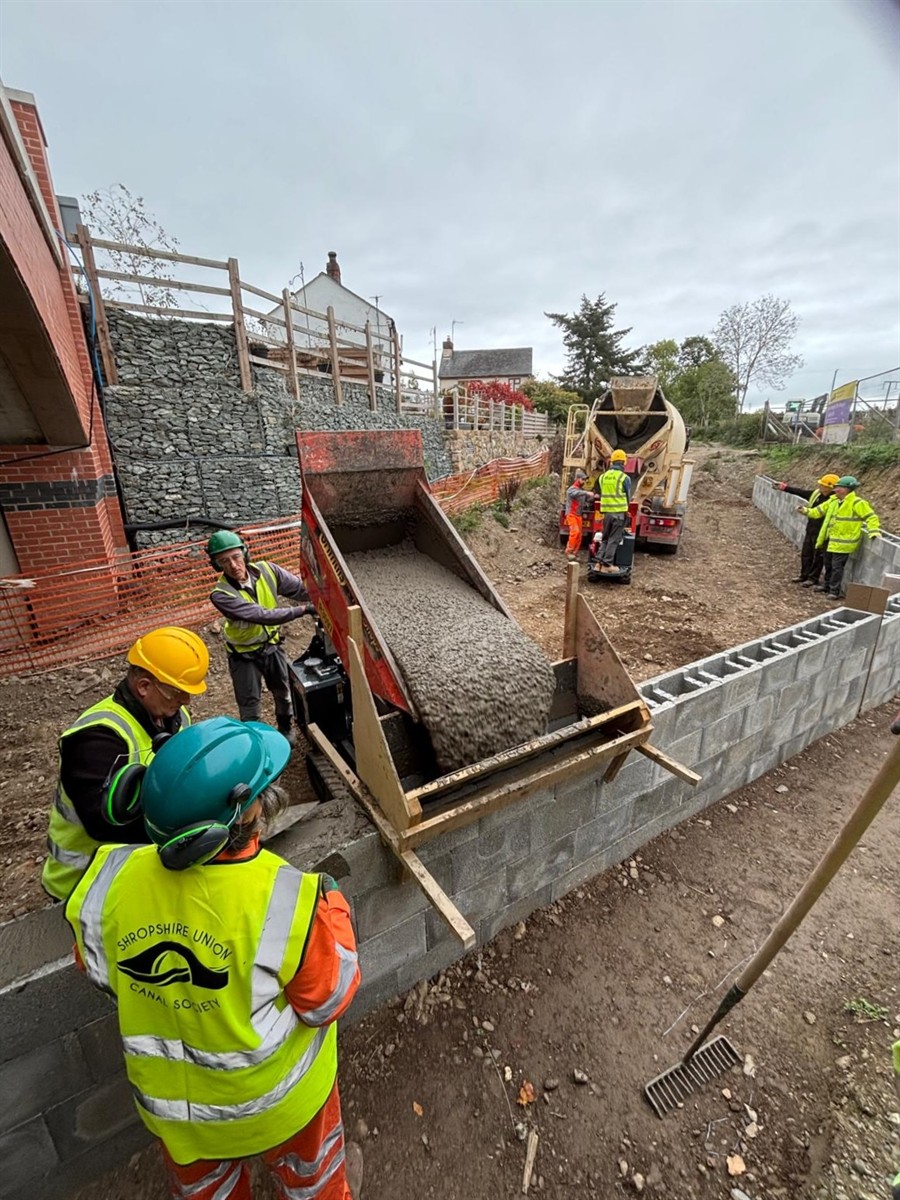
But even before documenting the numerous activities over this extended work party, a record must be made of additional activity in mid-October. Having completed the wash wall block work at the October work party, ten volunteers returned a couple of weeks later for the final concrete pour. Using two power barrows and methods perfected since the previous pour, this was completed very efficiently, with the job done by lunchtime.
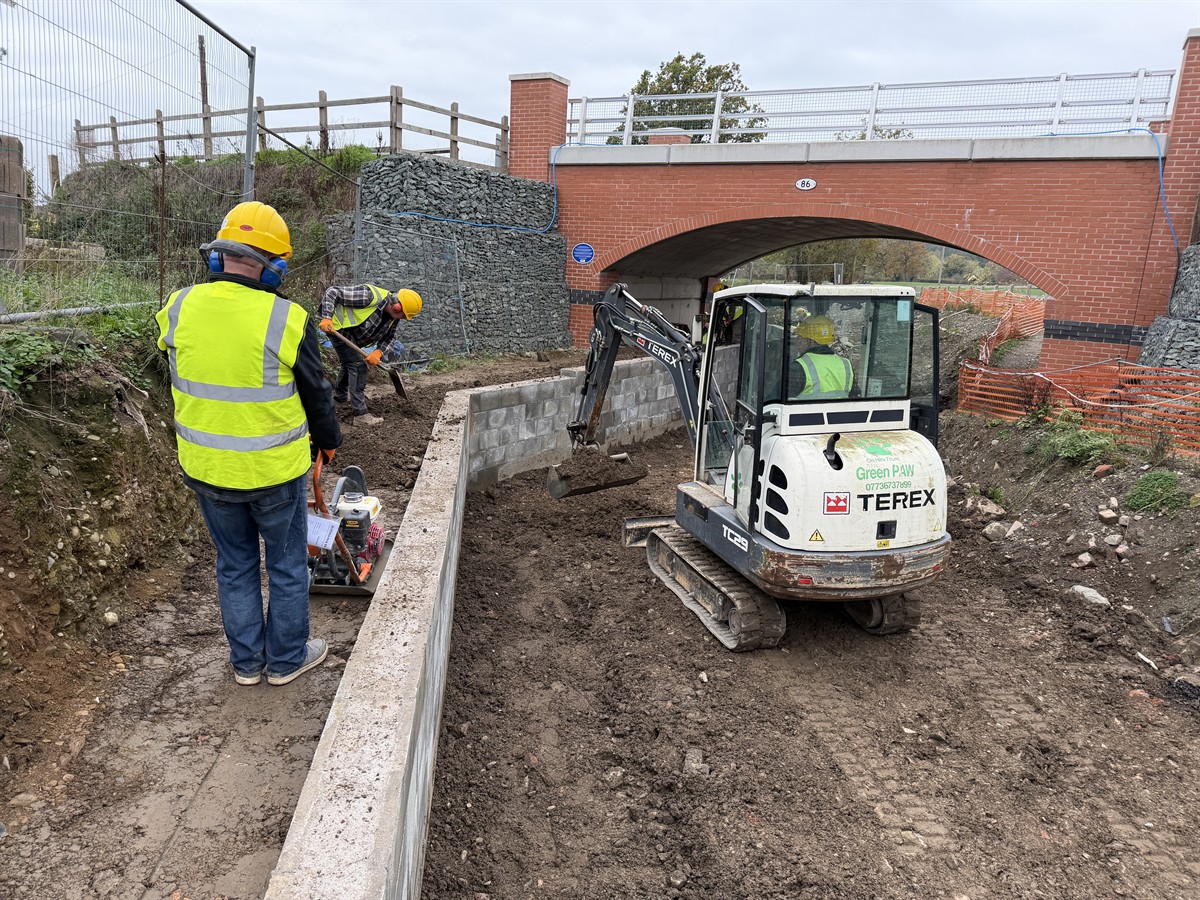
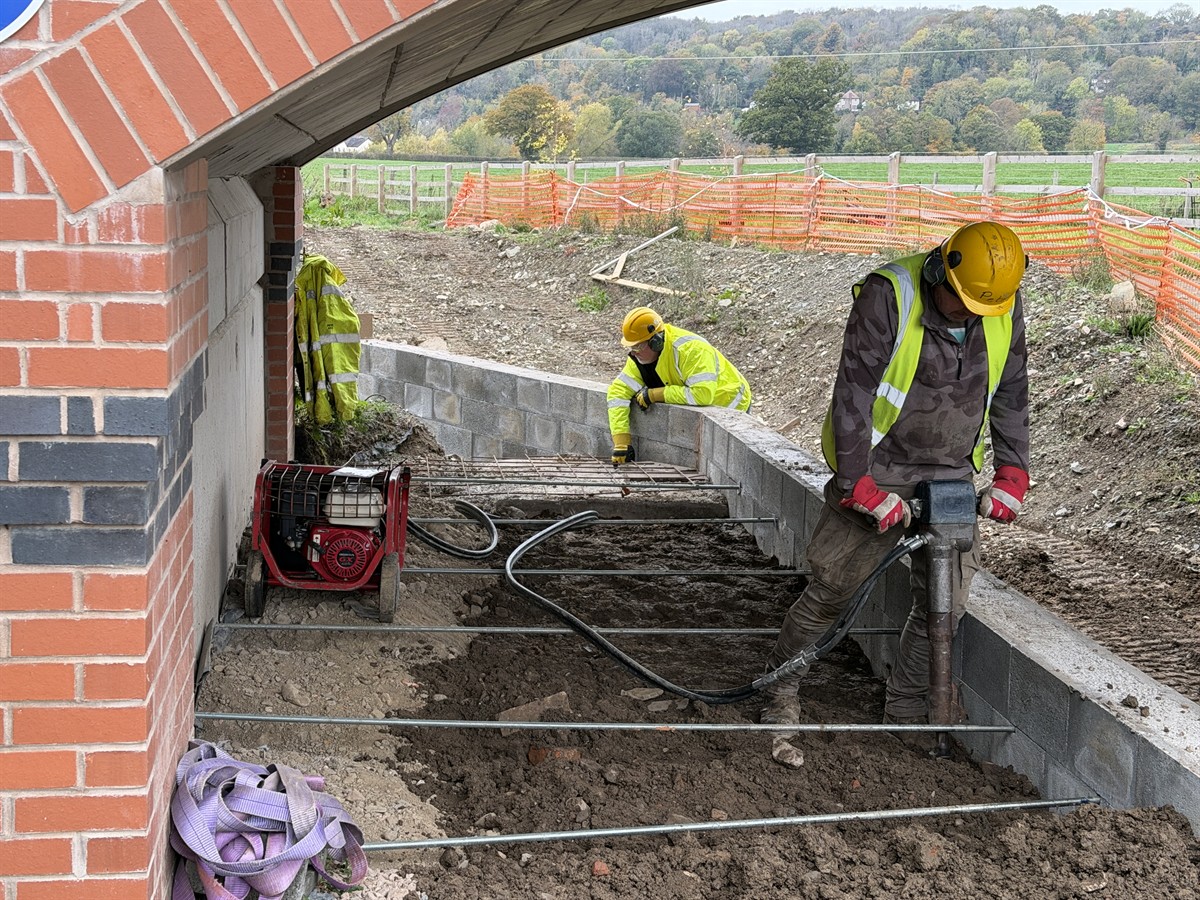
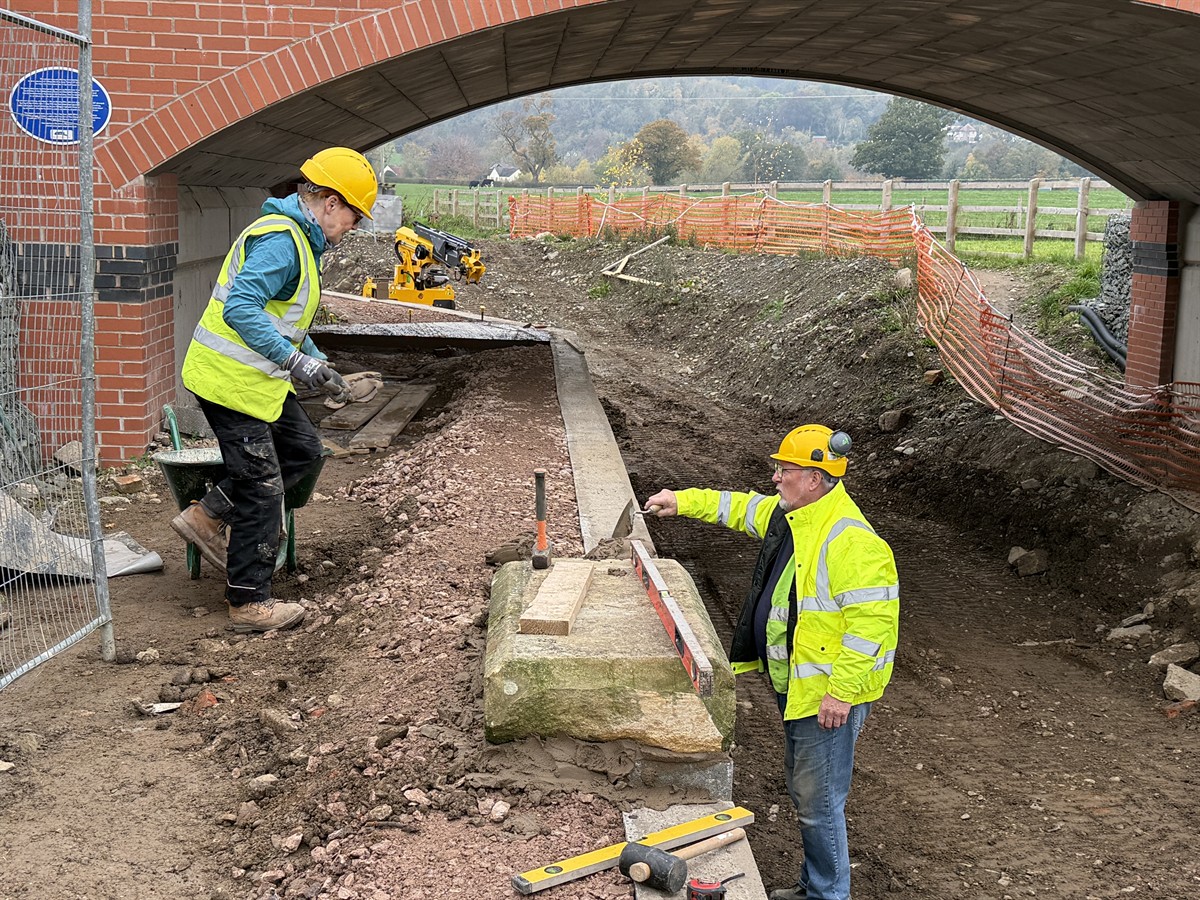
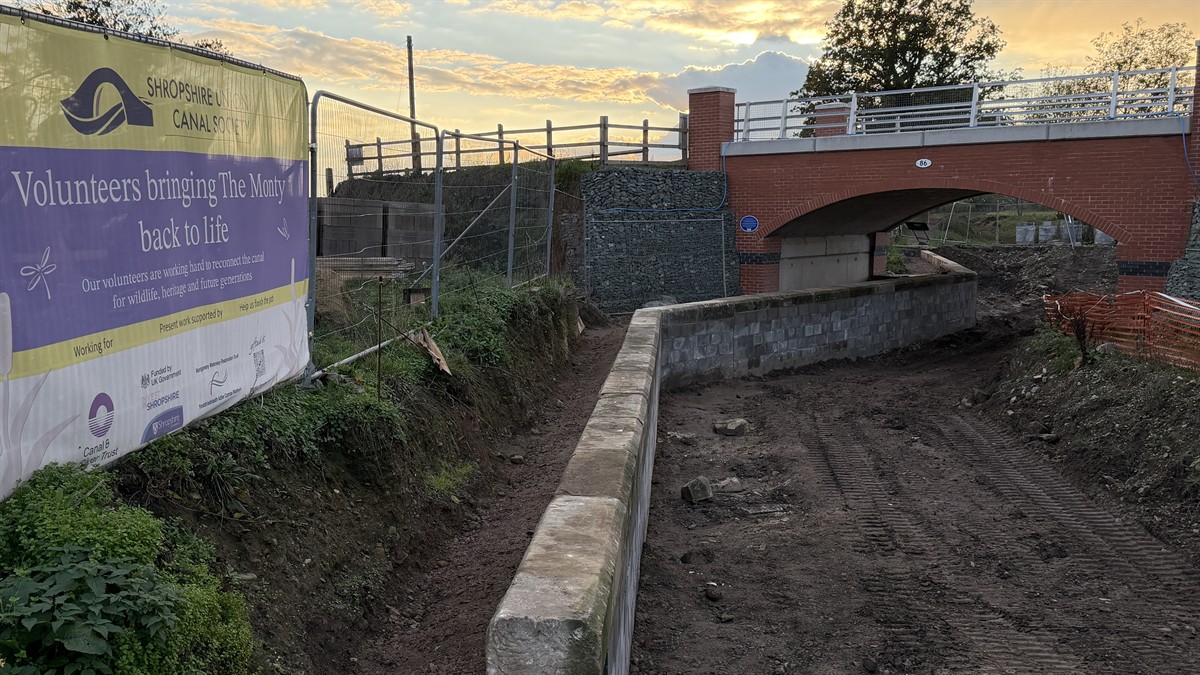
The plan for November was to start placing coping stones on top of the completed wall, but as these extended beyond the rear of the block wall, the area behind needed to be back filled and compacted using site-won material topped with a layer of aggregate on which the copings would sit. Although the backfill was compacted in layers with a wacker plate, a hydraulic breaker fitted with an elephant foot was also used immediately behind the wall for additional compaction and to remove the risk of wide copings moving with settlement. This tool also proved useful beneath the bridge to provide compaction between the tie rods where the wacker plate could not reach.
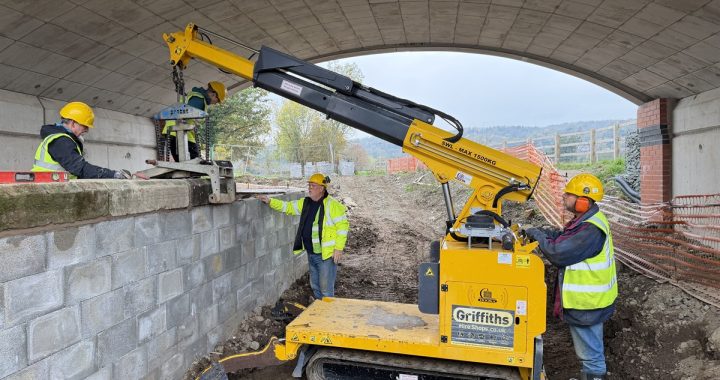
Copings can be an expensive element and we were very fortunate to have been donated two different sets of reclaimed copings a couple of years ago. As these were insufficient for the full length, they were supplemented by new copings as specified for the Crickheath Wharf restoration. All three sets have different dimensions, which created some challenges – the block wall is built in three sections of differing levels to accommodate this. Cleaning and sorting which copings would go where was done simultaneously with backfilling and by Friday morning, we were ready to start. Another challenge was the limited headroom available beneath the bridge arch, for which a specialist Hooka lift was hired instead of attaching the kerb grab to the digger boom. With the challenges, it was anticipated placing the copings would take a couple of work parties yet, incredibly, the full 44 metres was completed by Sunday afternoon. A superbly tidy job.
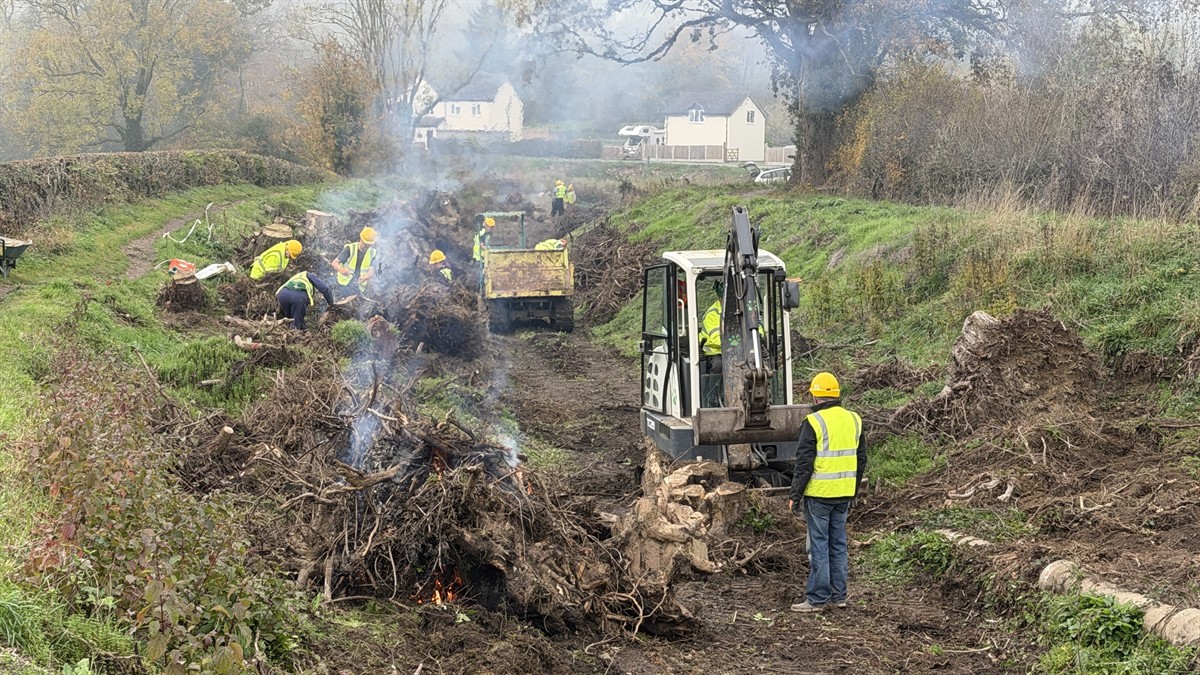
The other main activity was clearance in Phase 3 and Waen Wen. Despite many hands, it certainly wasn’t light work, but tremendous progress was made. Thursday and Friday was spent removing remaining stumps and other material to Waen Wen and the seemingly endless task of chipping away soil and stones from between the roots. Saturday and Sunday was spent feeding multiple fires to burn the stumps and salvaging firewood from this material – some of which taken away by grateful locals – together with the seemingly endless task of chipping away soil and stones from between the roots. With approximately 200 stumps in Waen Wen, some of them massive, this is an activity that will continue for some time.
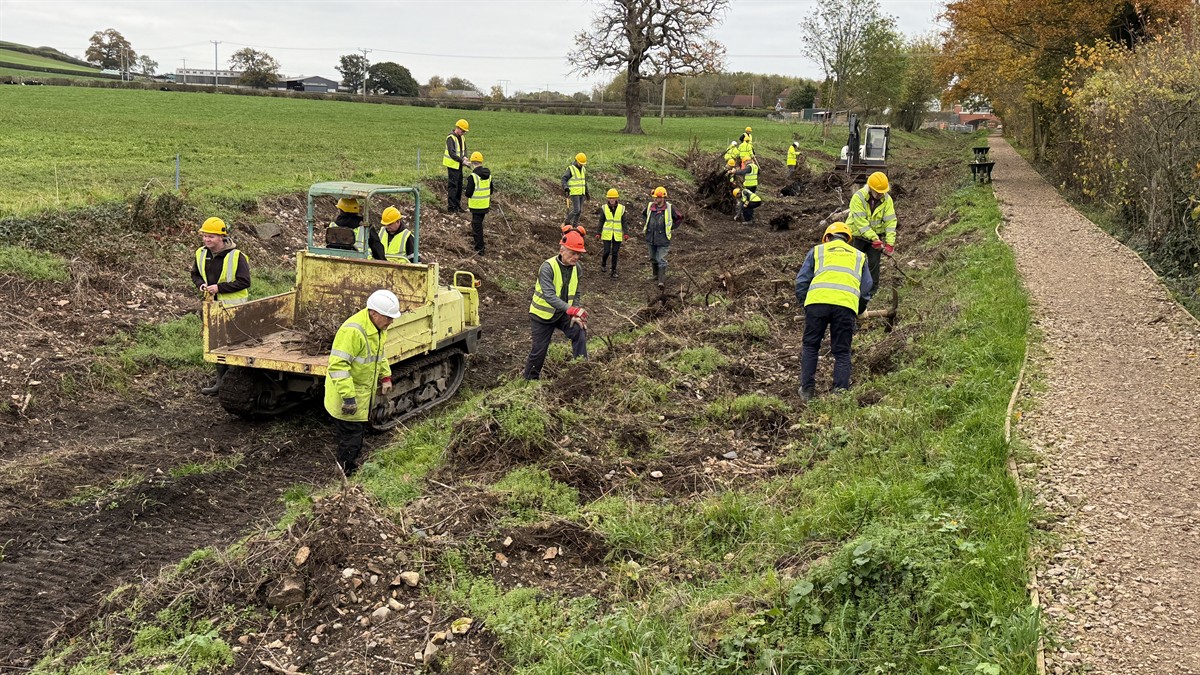
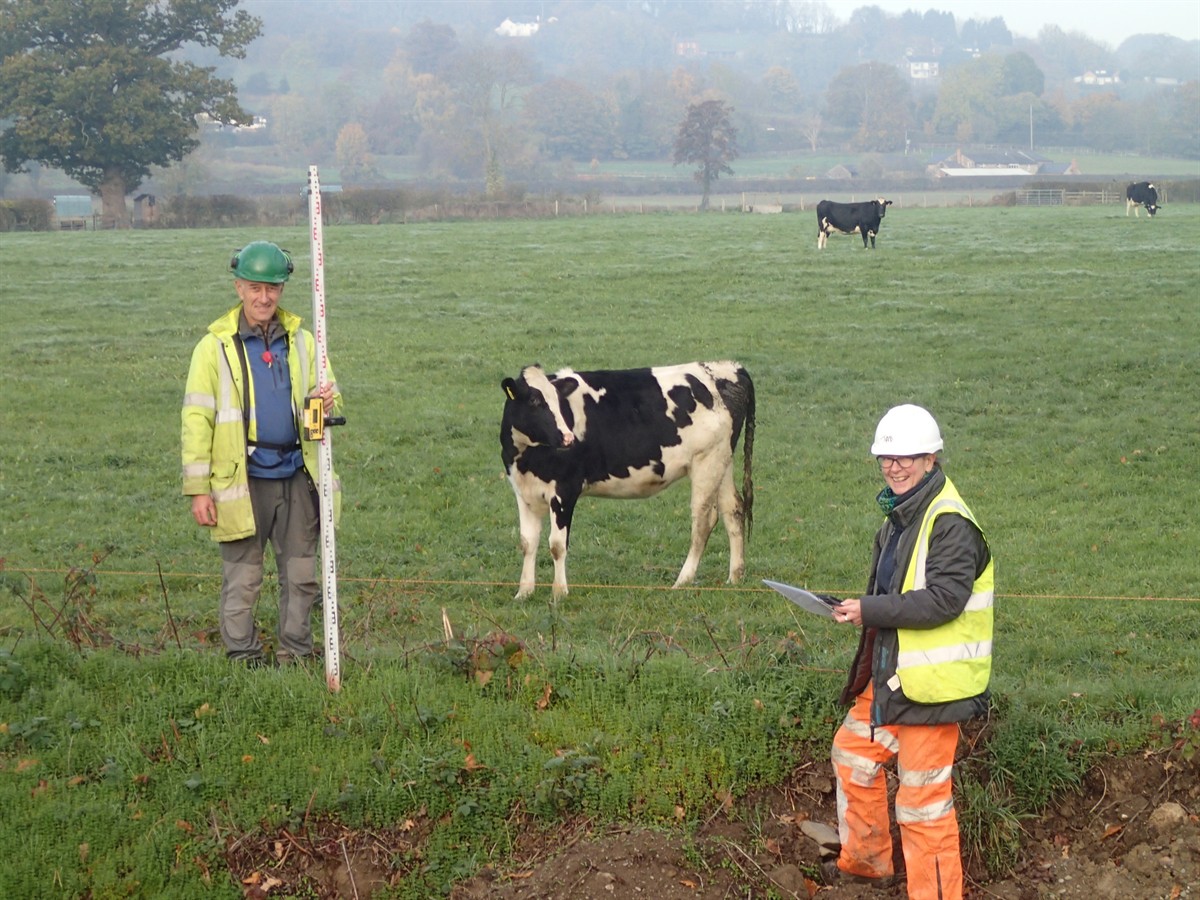
With Phase 3 now completely clear, cross-section levels could be surveyed at regular intervals. From this will be derived the detailed plan and schedule for relining this section, starting in the new year. This year’s winter environmental programme also kicked off with a day of hedging-laying. More will follow in subsequent work parties together with hedge planting.
Finally, the annual health and safety audit was recently performed by Canal and River Trust. Jason Leach, Head of External Programme Delivery, commented, “The approach to health and safety demonstrates a mature, open and proactive safety culture. There is some excellent practice here. A real credit to everyone involved”.